A split pipe or failed plumbing connection can soak cabinets, flooring, and walls in a short time. Water Damage Edmond helps residents and businesses limit further damage with water removal, moisture checks, and a drying plan for the affected parts of the property.
After the leak is stopped, water can still be trapped beneath flooring, inside cabinets, or behind drywall. We inspect beyond the wettest visible area, remove standing water, and check nearby materials to guide the cleanup.
Winter freezes are one cause of burst pipes in Edmond, but connections, hoses, and aging plumbing can fail at any time of year. Water may travel down a wall or across a floor before it appears in the room below, so we consider the building layout when checking the extent of the damage.
Edmond experiences dramatic temperature fluctuations. Arctic cold fronts can send overnight temperatures plummeting into single digits, freezing plumbing run through unheated crawlspaces, exterior walls, and attics. As ice expands, it fractures the pipe walls, creating sudden floods upon thawing. We understand the unique structural layout of Edmond homes—from historic slab foundations in Downtown Edmond to modern multi-level builds in Coffee Creek and Oak Tree—ensuring thorough mitigation tailored to your architecture.
Water damage cleanup does not repair the plumbing itself. Once the source is controlled, restoration can address wet contents and building materials, followed by drying and any repairs identified during the assessment.
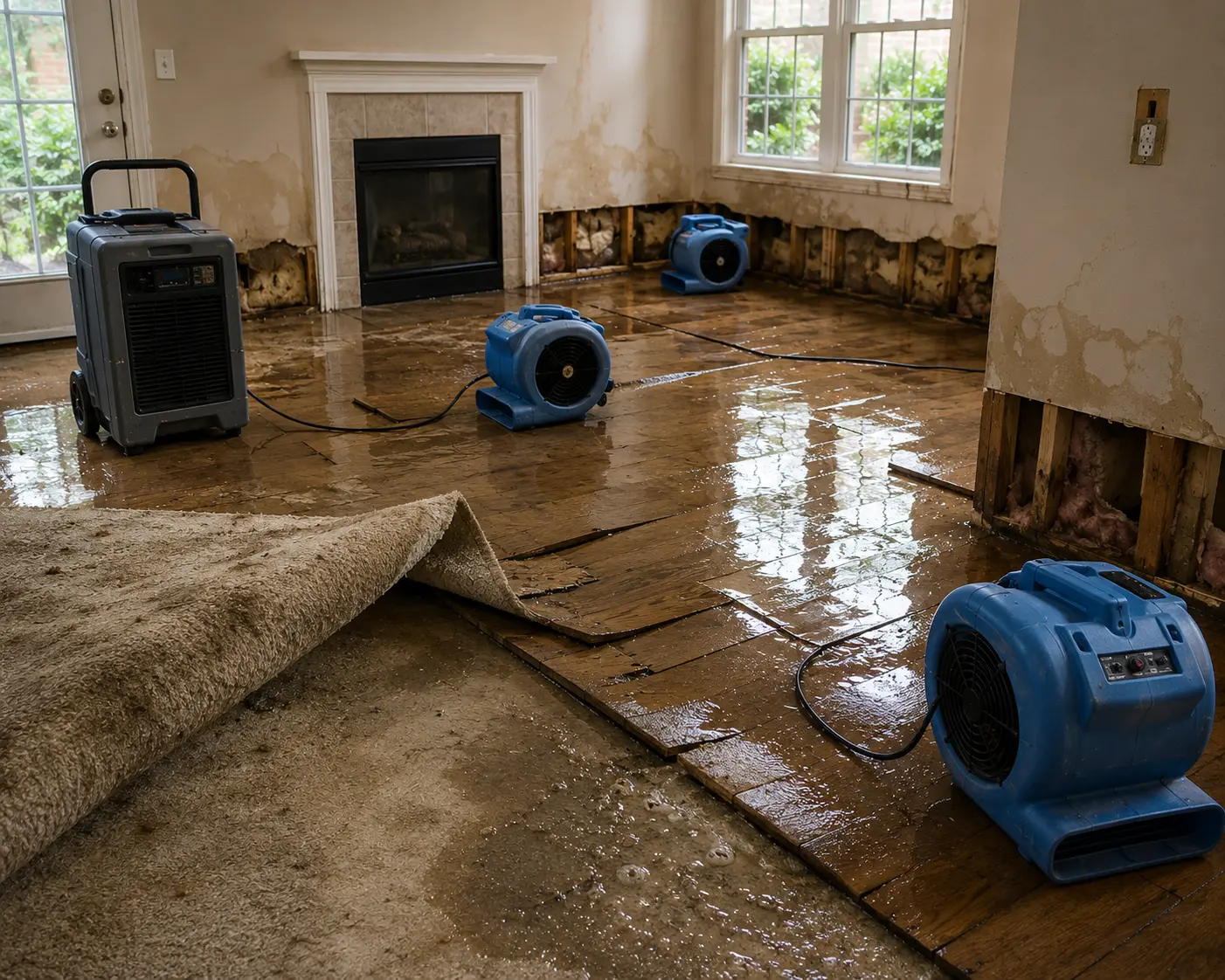
A ruptured supply line requires instant response. Our emergency dispatch team is ready 24 hours a day across Edmond to initiate extraction before water damages load-bearing framing.
Water travels silently along ceiling joists and under flooring. We use FLIR infrared thermal cameras and non-penetrating moisture meters to trace the entire migration path without needlessly cutting open dry walls.
We deploy specialized air-injection systems and low-grain refrigerant (LGR) dehumidifiers designed to blow dry, heated air into wall cavities and beneath kitchen cabinets, saving expensive custom woodwork.
We work directly with your insurance adjuster, submitting detailed Xactimate line-item estimates, photo documentation, and daily drying logs to ensure your claim is processed smoothly.
We follow a rigorous, IICRC-certified mitigation protocol designed to extract water rapidly, eliminate hidden structural dampness, and prepare your property for seamless reconstruction.
We verify the supply line shutoff and immediately survey the property using infrared cameras and moisture meters to delineate the exact boundaries of water saturation.
We deploy industrial truck-mounted vacuums and submersible pumps to remove bulk water from carpeting, tile, vinyl, and subflooring, relieving hydrostatic weight.
We remove baseboards and make precise micro-openings to direct pressurized dry air into wet wall cavities, pairing this with high-velocity air movers and commercial LGR dehumidifiers.
To prevent mold and mildew from germinating in the damp cavities, we apply botanical, EPA-registered antimicrobials across all exposed framing and subfloor surfaces.
We track moisture readings daily until all materials hit standard dry baselines, providing certified documentation for your insurer and coordinating necessary repairs.
Locate your main water shutoff valve immediately—typically found near your water heater, in the garage, or near the street in a ground meter box. Turn the ball valve perpendicular to the pipe or use a meter key. Shutting off the main supply halts high-pressure flooding instantly while our emergency crew dispatches.
Rapid Arctic cold snaps across central Oklahoma drop temperatures into single digits. Water expands as it freezes inside uninsulated attic pipes, crawlspaces, and exterior wall plumbing. The resulting hydrostatic pressure creates longitudinal splits in copper, CPVC, and PEX pipes that erupt as temperatures rise and thaw.
Yes. High-pressure pipe ruptures force gallons of water inside drywall cavities, beneath vanity cabinets, and across subflooring. Because drywall backing and insulation stay damp, toxic mold spores can colonize within 24 to 48 hours unless structural drying and cavity air injection are initiated immediately.
Standard homeowners insurance policies in Oklahoma typically cover sudden, accidental pipe bursts and the resulting structural water damage. We assist by providing line-item Xactimate estimates, detailed moisture maps, and photographic evidence directly to your insurance adjuster.
A licensed plumber fixes or solders the broken pipe itself. Our restoration team handles the aftermath: extracting hundreds of gallons of water, opening wet baseboards, setting up commercial LGR dehumidifiers and air injection systems, sanitizing with antimicrobials, and restoring damaged building materials.
From established neighborhoods near Hafer Park and the University of Central Oklahoma to newer developments across North Kelly, Danforth, and Covell, Edmond homes feature diverse plumbing setups. Whether your frozen line burst in an exterior wall during an Oklahoma cold snap or an attic water heater line fractured in Oak Tree or Twin Bridges, our local technicians know the area and arrive quickly. We also assist neighboring communities in Guthrie, Arcadia, and North Oklahoma City. If you suspect a pipe has burst, immediately shut off the water at the main valve and call our 24/7 helpline.
Don't let standing water destroy your floors and framing. Call us now with your address and leak details—our emergency team will dispatch immediately.