Heavy rain can push muddy runoff through a garage, doorway, or foundation opening and leave homes across Edmond with water, silt, and damaged belongings. Water Damage Edmond helps property owners assess the affected areas, remove floodwater, and plan the cleanup and drying work that follows.
Water that comes from outside may contain soil and other contaminants, so it should not be treated like a clean plumbing leak. We identify the water source, keep people away from unsafe areas, and determine which cleanup and material-handling steps are appropriate.
Edmond storms can bring fast-moving runoff and muddy sediment into low-lying rooms, garages, and finished basements. Once the water recedes, mud can remain along floors and in wall edges, while moisture may continue into trim, insulation, and other hidden materials.
Unlike clean plumbing leaks, storm floodwaters carry microscopic pathogens and bacteria. Under IICRC S500 standards, saturated porous items such as carpet pad and wet drywall cannot simply be dried—they must be safely removed via precision flood cuts (typically 12 to 24 inches above the water line) to prevent dangerous bacterial colonization. Our technicians isolate the flooded zone using plastic zip-wall barriers and run HEPA-filtered negative air machines to prevent mold spores and fine silt dust from circulating into clean living areas.
Serving Edmond, Guthrie, Arcadia, and North Oklahoma City, our emergency teams manage the complete flood recovery lifecycle. We shovel and extract thick clay silt, treat exposed studs with EPA-registered botanical antimicrobials, and deploy industrial Low-Grain Refrigerant (LGR) dehumidifiers to extract deep-seated moisture from concrete slabs and structural framing.
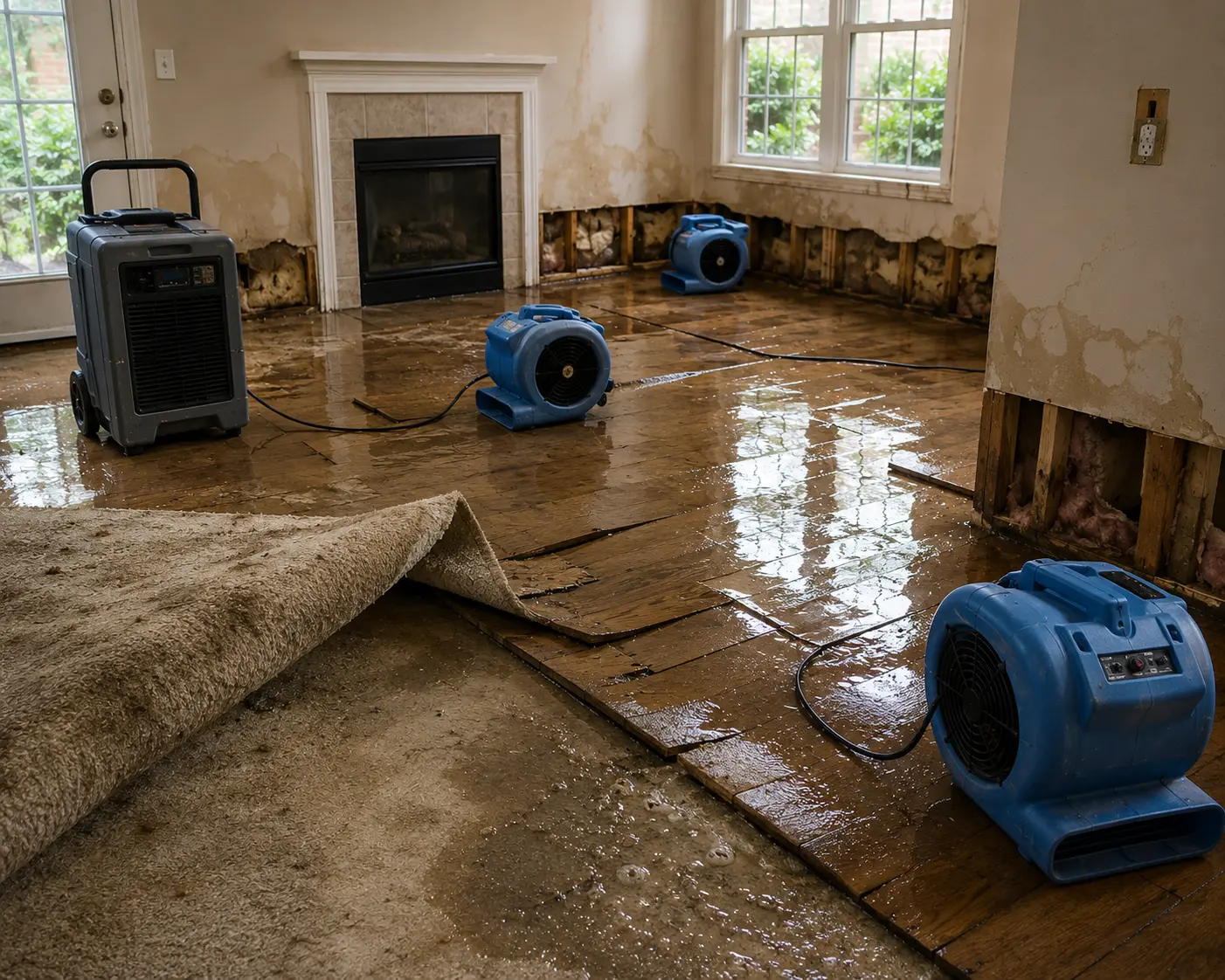
Flash flooding requires instant containment. Our emergency teams dispatch 24/7 across Edmond, equipped with submersible trash pumps and extraction gear to halt water progression before structural settling occurs.
Ground floodwater carries dangerous agricultural, bacterial, and chemical pollutants. We follow strict IICRC S500 decontamination standards, using hospital-grade botanical antimicrobials and containment barriers.
Oklahoma red clay silt leaves fine particulate dust and staining. We thoroughly flush framing, extract sediment, and scrub ambient air with industrial HEPA filtration units to ensure pure indoor air quality.
We document all storm damage with high-resolution digital photos, moisture logs, and itemized Xactimate estimates, coordinating directly with flood adjusters and insurance representatives.
From initial storm impact to final structural clearance, our systematic protocol eliminates biohazards, extracts water and mud, and restores safety to your Edmond property.
We inspect the structure for standing electrical risks, structural subsidence, and contamination boundaries, creating an immediate containment and safety plan.
We remove deep floodwaters using high-capacity trash pumps, shovel out dense Oklahoma red clay silt, and extract residual liquid with industrial wet-vac units.
We execute clean flood cuts through saturated drywall 12 to 24 inches above the water line, removing soaked insulation and carpet padding to eliminate trapped bacteria.
All preserved framing studs, sill plates, and concrete slabs undergo deep cleaning and treatment with EPA-registered botanical biocides to prevent mold and bacterial growth.
We deploy commercial Low-Grain Refrigerant dehumidifiers and high-velocity axial air movers, logging psychrometric drying data daily until framing returns to baseline dry standards.
Yes. Floodwaters originating from Oklahoma storm runoff, overflowing creeks, or saturated ground are classified as Category 3 'Black Water'. They carry dangerous biohazards, agricultural runoff, bacteria (such as E. coli), viruses, silt, and chemicals. Professional containment and hospital-grade antimicrobial disinfection are required before living spaces are safe.
Oklahoma red Permian clay creates dense silt that clings to flooring and wall studs. We shovel and scrape bulk sediment, flush framing with antimicrobial wash solutions, and utilize commercial wet-vac extraction to remove fine particles before beginning the mechanical drying process.
Under IICRC S500 guidelines for Category 3 water, all saturated porous building materials that cannot be fully decontaminated must be safely removed. This typically includes carpet padding, soaked drywall (cut 12 to 24 inches above the water line, known as a flood cut), and wet fiberglass insulation. Non-porous framing lumber and concrete slabs are preserved, sanitized, and dried in place.
Standard homeowners policies generally exclude exterior rising floodwaters unless you carry a separate National Flood Insurance Program (NFIP) or private flood policy. However, water entering due to storm-damaged roofs, broken windows, or sudden sewer/drain backup may be covered under specific endorsements. We provide detailed photographic documentation and line-item estimates to assist your adjuster.
Prioritize life safety: shut off the main electrical breaker if you can safely reach it without stepping in floodwater. Do not walk or wade through murky floodwater, which can conceal electrical hazards or sharp debris. Contact our emergency dispatch team immediately so we can establish containment barriers and begin mud and water extraction.
From low-lying properties near Spring Creek, Chisholm Creek, and Hafer Park to residential communities around Coffee Creek, Oak Tree, and Mitch Park, Edmond's topography makes it vulnerable to rapid storm runoff. Dense red clay soils prevent quick drainage, forcing deluge waters toward foundation walls and garage entries. We also provide immediate flood disaster mitigation in Arcadia, Guthrie, and North Oklahoma City. If storm floodwaters have breached your building, do not wait for mold and rot to set in. Call our 24/7 flood hotline now.
Speak with a flood recovery coordinator. We will assess the severity of your water intrusion, provide critical safety instructions, and dispatch our emergency response team immediately to your Edmond location.