Lingering dampness after a leak or flood can create conditions for mold growth. Water Damage Edmond helps property owners in Edmond identify wet materials, remove water, and begin drying promptly to limit the chance of a larger moisture problem.
Once porous building materials are saturated, latent fungal spores—including Aspergillus, Penicillium, and toxic Stachybotrys chartarum—feed on organic cellulose. Simply wiping water or running ceiling fans does not lower relative humidity or eliminate trapped moisture inside wall cavities. We deploy thermal imaging cameras and medical-grade biocides to eliminate spore viability before dangerous colonies multiply.
Mold prevention begins with correcting the moisture problem. Plumbing leaks, roof openings, and stormwater can affect different materials, so the inspection should include the likely path of water and any concealed damp areas.
Our IICRC-certified remediation specialists employ forward-looking infrared (FLIR) thermal imaging and pinless radio-frequency meters to map hidden moisture boundaries behind baseboards, beneath laminate flooring, and inside insulated wall cavities. Once moisture pockets are isolated, we apply EPA-registered botanical biocides formulated from natural thyme oil extracts that neutralize spores at the cellular level without toxic synthetic odors.
Drying equipment and containment may be appropriate depending on the scope of the affected area. Products alone cannot resolve a moisture problem; wet materials need to be dried or removed as appropriate and the source of water corrected.
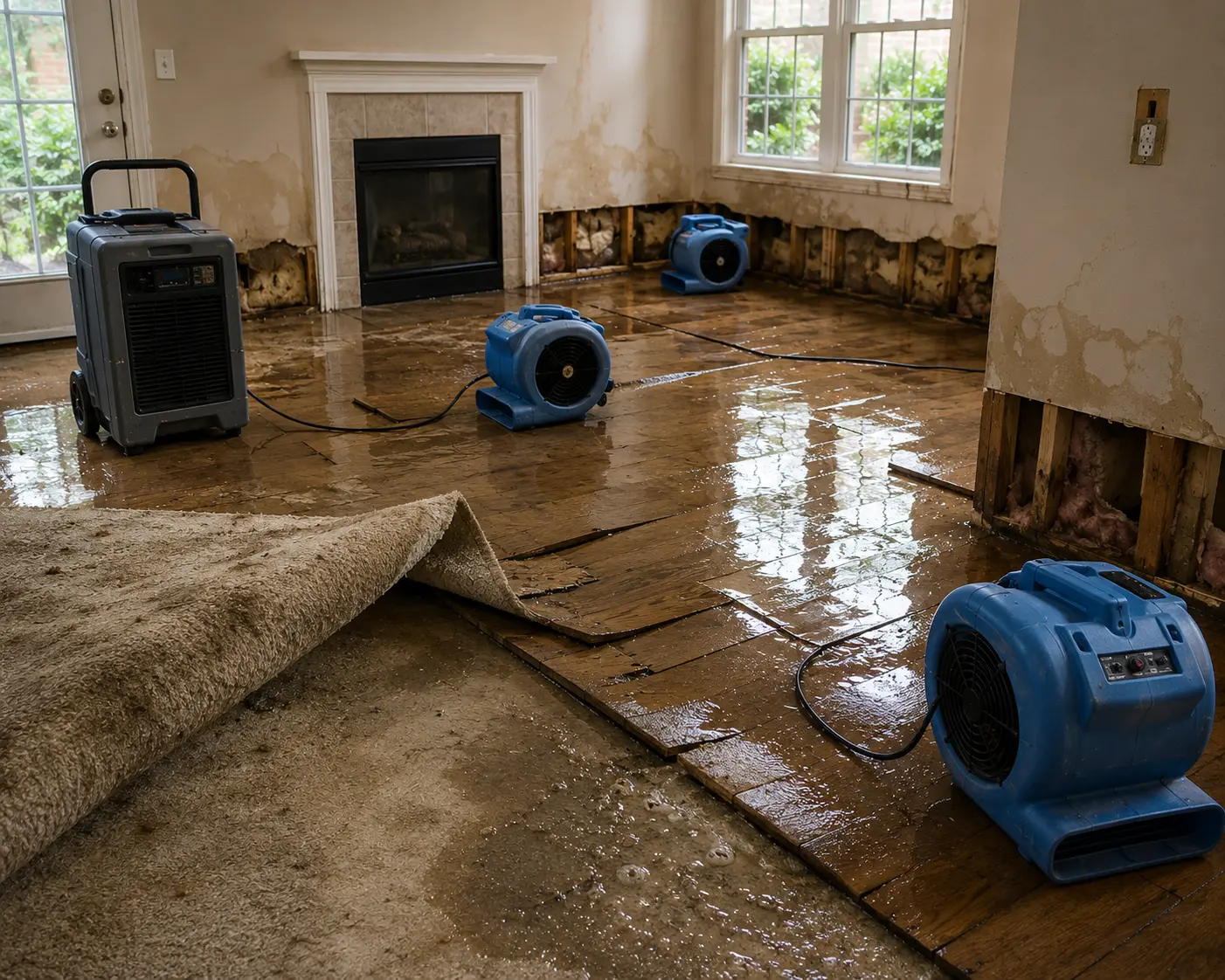
Mold spores germinate within hours of moisture contact. Our rapid-dispatch Edmond teams deploy immediately to disrupt the fungal colonization window before visible colonies take hold.
We treat framing, masonry, and subfloors with hospital-grade, non-toxic botanical antimicrobials (such as plant-derived thymol) that destroy fungal cell walls without harsh synthetic chemicals.
We isolate affected rooms with zippered containment barriers and operate commercial HEPA air filtration devices to strip ambient mold spores and mycotoxins from indoor air.
By operating commercial Low-Grain Refrigerant dehumidifiers, we force indoor relative humidity below 50%, completely halting spore germination and wood decay fungi.
From initial thermal imaging scans to verified microbial clearance, our systematic protocol guarantees total mold inhibition following water intrusion.
We scan walls, ceilings, and flooring assemblies with FLIR thermal imaging cameras and penetrative RF meters to discover all hidden pockets of dampness before fungal blooms develop.
Eliminating standing water is priority one. We use high-performance truck-mounted and portable extraction units to draw saturation out of carpets, subflooring, and framing.
Saturated drywall and insulation act as cellulose food for mold. We execute precision cuts to remove contaminated porous materials, exposing framing studs for direct treatment.
All exposed structural framing, base plates, and concrete surfaces are thoroughly cleaned and saturated with EPA-registered botanical fungistats to eliminate lingering spores.
We deploy industrial LGR dehumidifiers and continuous HEPA filtration units, logging air humidity and wood moisture daily until framing achieves verified dry clearance standards.
Under ideal conditions (warmth, organic food sources like drywall cellulose, and high moisture), mold spores germinate within 24 to 48 hours. By 72 hours, visible colonies and active mycotoxin production can contaminate indoor air. Immediate rapid drying and antimicrobial biocide application are critical.
Yes. We utilize EPA-registered botanical biocides formulated from natural plant extracts such as thymol (thyme oil). These medical-grade disinfectants eliminate 99.99% of fungal spores, bacteria, and viruses without toxic synthetic chemicals, harsh off-gassing, or lingering fumes.
According to EPA and IICRC standards, indoor relative humidity (RH) must be suppressed below 50%—and ideally maintained between 30% and 45%—during structural restoration. Our industrial LGR dehumidifiers maintain this optimal range to inhibit spore viability.
Chlorine bleach is primarily water-based and ineffective on porous materials like drywall and wood. The chlorine chemical evaporates quickly on the surface, leaving residual water that sinks into the wood grain, which actually accelerates fungal hyphae root growth deep within the substrate.
We deploy forward-looking infrared (FLIR) thermal imaging cameras and deep-penetrating radio-frequency moisture meters. These non-destructive diagnostic tools identify temperature differentials caused by concealed moisture pockets where dormant spores thrive.
Oklahoma's spring supercells and hot, humid summer climate create prime conditions for aggressive mold expansion after any indoor plumbing break or storm intrusion. Homes and businesses across Coffee Creek, Mitch Park, Oak Tree, Hafer Park, Spring Creek, and downtown Edmond require prompt antimicrobial stabilization before microscopic spores multiply into structural colonies. We also deliver 24/7 moisture mitigation and preventative treatments throughout Arcadia, Guthrie, and North Oklahoma City. Call our emergency dispatch team immediately following water damage to prevent costly mold remediation.
Every hour counts when building materials remain damp. Contact our certified mold prevention technicians 24/7 for prompt diagnostic moisture mapping and antimicrobial application.